The first Fitbit after Google announced it intends to buy the company last fall looks... well, like every other Fitbit that came before it. And it’s apparently intentional, as the company wants to expand on one of its most popular fitness trackers that’s long due for an update
The Fitbit Charge 4 is pretty much exactly as the leaksahead of its official announcementteased: it’s essentially the look and feel of the Charge 3 with built-in GPS, Spotify control, and other high-end features typically found on Fitbit’s smartwatches like Fitbit Pay, app notifications, smart wake, and an SpO2 sensor. The $149 tracker has a battery life of up to seven days, or up to five hours with continuous GPS use.
With built-in GPS, Fitbit wearers no longer have to take their phones out on a bike ride, hike, or run to record their heart rate, distance, and speed. Workout information will automatically be recorded to the app, making it useful if you run similar routes often and want to check if your pace is getting faster. It’s a sorely missed sensor that even Fitbit’s Versa smartwatches don’t have.
All of these features now come standard with the Charge 4 instead of having to splurge for a special edition. (True to form, Fitbit is releasing a Charge 4 SE, but the extra $20 basically buys you a reflective band for night commutes in addition to a classic black band.) Since the Charge 4 has the same dimensions as the Charge 3, you can use bands from the previous model on the new tracker.
The Charge 4 also debuts with a new fitness metric called Active Zone Minutes, which automatically recognizes when your heart rate is at a sustained, heightened level and counts the minutes you are “active.” Fitbit says this is to promote people to be active for at least 30 minutes a day — something that’s getting admittedly harder to achieve given the mass self-quarantine and social distancing measures across the US right now. Since Active Zone Minutes is based on heart rate, the score is calculated by factoring each person’s height, weight, and fitness levels. The feature follows a series of other Fitbit metrics like sleep score and 10,000 daily steps, which the company uses as basic guidelines for encouraging wellness.
With today’s launch, Fitbit will no longer sell the Charge 3 on its website, though it will be available for purchase through other retailers. Given that Fitbit is not selling Charge 3s anymore, prices will like fluctuate among different vendors. If built-in GPS, Fitbit Pay, and music control is not a big deal to you, now is a good time to snag its older tracker for steep discount.
The Charge 4 goes on sale today for $149 and is available in mauve, blue, and black. It’ll also come with an extended 90-day trial of Fitbit Premium, which offers fitness programs, classes, and personalized challenges to help you set and reach your wellness goals.
Update March 31st, 2020 9:30 AM ET: An earlier version of this story said Fitbit had been acquired by Google. Google announced it intends to buy Fitbit in November 2019, but as of March 2020, the acquisition has not yet been completed.
Vox Media has affiliate partnerships. These do not influence editorial content, though Vox Media may earn commissions for products purchased via affiliate links. For more information, see our ethics policy.
For streaming services and games companies, we're all a captive audience at the moment. For Disney+, the newest challenger, it's an opportunity. With lots of kids at home, an almost infinite run of Disney, Pixar, Marvel and Star Wars content will save the sanity of many parents. Games, too, are suddenly appearing in stores, in rumors or at your front door as companies try to capitalize on all this stay-at-home time. For Final Fantasy VII Remake, it's a matter of getting the game to those who preordered it by the launch date, with the coronavirus affecting distribution. For Nintendo, well, it's still at the rumor stage, but releasing decades worth of Super Mario games for the Switch sounds like a very, very good idea to me.
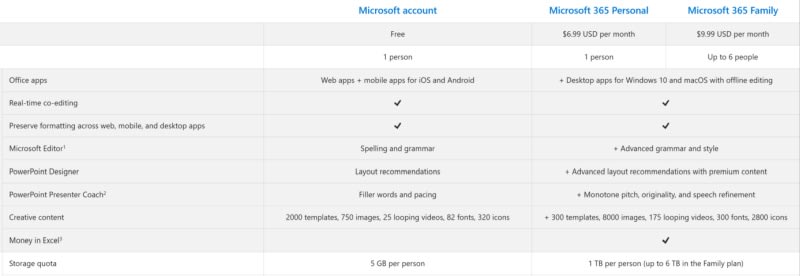
On April 21st, Microsoft is renaming its Office suite service to Microsoft 365 as it adds more AI- and cloud-powered tools to make you more productive. It all costs the same -- $7 a month/$70 a year for personal use and $10 a month/$100 a year for the family plan -- but the scope of the service is much broader. For one, Microsoft is launching a new Family Safety app for tracking screentime and other aspects of your digital life.
New features include expanded functionality for Microsoft Editor, the company's AI tool for writing help. You can use it on Microsoft Edge and Google Chrome with a browser extension and highlight a sentence to get some rewriting suggestions. Meanwhile, PowerPoint's Presenter Coach will also monitor your pitch and suggest speech variations to add some sparkle to your sales deck. PowerPoint Designer is also adding access to over 8,000 images and 175 looping videos from Getty.
While the NBA's existing esports league probably has better video game players, putting basketball stars on the sticks could -- like Fox's NASCAR/iRacing broadcasts -- bring even more exposure to this as a viable spectator sport. Here's hoping they don't run into any gamebreaking bugs during the ESPN broadcast.
Instacart didn't have success trying to avert a strike over a lack of COVID-19 protections. The Gig Workers Collective declared Monday that a shopper strike was "still on" after asserting that Instacart's concessions were inadequate. That included a change that set the tip default to a customer's previous amount, which will likely offer "no meaningful benefit," the shoppers said, as that previous amount will most likely have come from the pre-outbreak era. Add to that no sick pay for workers who have to stay home due to health conditions and the lack of hazard pay discussions. An average pay per order of less than $10 still leaves shoppers "risking their lives for pocket change."
While there are a few old Mario games already available through the NES and SNES Switch Online services, Nintendo plans to remaster "most" of the Mario back catalog, according to Video Games Chronicle. That could include Super Mario Galaxy and a deluxe version of Super Mario 3D World, Eurogamerreports, with the latter including some additional levels. A new Paper Mario game is also said to be in development, along with re-releases of Super Mario 64 and Super Mario Sunshine. Was this Nintendo's big E3 reveal?
When Samsung's Galaxy Chromebook arrived at CES 2020 with a beautiful body and 13.3-inch 4K OLED display, we were smitten. Samsung's model will be one of the cheapest OLED notebooks on the market and packs more power than other Chrome OS machines thanks to a 10-generation Core i5 chipset along with 8GB of LPDDR3 RAM and a 256GB SSD. It goes on sale April 6th at Samsung's website and Best Buy for $999.
All products recommended by Engadget are selected by our editorial team, independent of our parent company. Some of our stories include affiliate links. If you buy something through one of these links, we may earn an affiliate commission.
If the coronavirus pandemic had swept across the world in 2011, everyone would have been using Skype to connect over video and voice calls. Instead, rivals like Zoom and Houseparty are having a moment of huge growth in 2020 thanks to consumers looking for Skype alternatives. In recent weeks we’ve seen people across the world sheltering at home and holding virtual yoga classes, beers with friends, and even school classes all over Zoom. It’s a unique once in a decade situation that’s highlighted Microsoft’s beleaguered Skype acquisition in a big way.
Microsoft originally acquired Skype for $8.5 billion back in 2011. It was the same year that Zoom and Snapchat were founded, and Apple launched its iPhone 4. Skype had more than 100 million active users back then, and 8 million of those were paying to use the service to make and receive calls using the voice over internet protocol (VoIP). Skype was the main way consumers actually talked to each other over the internet, with video calls making up 40 percent of all Skype usage back in 2011.
Skype had become so big that in 2011 The Onion joked that “Skype” would be added to the dictionary. Three years later, the verb was added to the Oxford English Dictionary, highlighting how popular the service had become. But Microsoft faced some big challenges early on to transform Skype into a profitable business and keep it relevant for consumers.
Microsoft’s Skype acquisition came just as chat apps like WhatsApp, Messenger, Snapchat, and WeChat were starting to gain momentum and challenge Skype’s dominance. Surprisingly, Microsoft opted to ditch its own popular Windows Live Messenger service in favor of Skype to try and ward off competition.
Microsoft had one big problem to solve early on, though. The company had acquired a service that was based on peer-to-peer (P2P) technology, which made it less efficient on mobile devices. This is where a lot of Microsoft’s Skype problems began. Microsoft transitioned Skype from these P2P networks to cloud-powered servers back in 2013, in order to capitalize on Skype integration on Windows Phone and improve its mobile apps in general.
The transition lasted years, and resulted in calls, messages, and notifications repeating on multiple devices. Skype became unreliable, at a time when rivals were continuing to offer solid alternatives that incorporated messaging functionality that actually worked and synced across devices. Instead of quickly fixing the underlying issues, Microsoft spent years trying to redesign Skype. This led to a lethal combination of an unreliable product with a user experience that changed on a monthly basis.
During this time, Microsoft also pushed Skype for Business as the replacement for its Lync (Office Communicator) enterprise instant messaging software. Skype looked like it would power the future of Microsoft’s chat services across consumers and businesses, until Microsoft Teams arrived in 2016. Teams has quickly become Microsoft’s focus for chat and communications in recent years. The company has been aggressively pushing businesses to adopt Teams, at a time when rivals like Slack are trying to win big businesses over.
Microsoft Teams isn’t just for businesses anymore, either. Just this week, Microsoft announced its Teams plan for consumers. It’s part of a bigger push for Microsoft 365 subscriptions to families and consumers. Microsoft is trying to convince consumers that Teams can be used to connect to friends and family in a group chat or through video calls, and share to-do lists, photos, and other content all in one location. Microsoft thinks people who plan trips with friends or organize book clubs and social gatherings will be interested in Teams.
This Teams push has taken the spotlight off Skype in recent years, though. Microsoft has used the underlying technology it has with Skype to power its video and voice calls in Teams, while rewriting the chat and messaging experience that the company struggled to get right with Skype’s Messenger transition.
All of this has now led Microsoft to throw its weight behind Teams, even for consumers. Skype isn’t likely to go away anytime soon, but it’s not Microsoft’s focus anymore. “For now, Skype will remain a great option for customers who love it and want to connect with basic chat and video calling capabilities,” says a Microsoft spokesperson in a statement to VentureBeat. “With the new features in the Microsoft Teams mobile app, we see Teams as an all in one hub for your work and life that integrates chat, video calling, [and the] ability to assign and share tasks, store and share important data with your group, [and] share your location with family and friends, whereas Skype is predominantly a chat and a video calling app platform. We have nothing more to share.”
Microsoft said in 2015 that Skype had 300 million active monthly users. The company hasn’t updated those numbers in the tumultuous period that followed. We still don’t know exactly how many people are using Skype, but Microsoft did provide some hints this week. During a press briefing, Microsoft revealed Skype is used by 200 million people, an active user count that’s based over a period of six months and not a monthly active user count. During the coronavirus pandemic, this usage has increased to 40 million people using Skype daily, up 70 percent month-over-month. That suggests that 12 million people were using Skype daily, before the increase in demand.
Microsoft is refusing to provide monthly active user counts for Skype, most likely because the company doesn’t want any obvious comparisons to competitors or the 300 million it previously revealed in 2015 when the service was still growing. 40 million daily users is still a big number, even when chat apps like WhatsApp have since passed 2 billion users, and Telegram has exceeded 200 million monthly active users.
The real question is how are rivals like Zoom, Houseparty, and even Google’s Hangouts growing during this ongoing coronavirus pandemic? Houseparty and Zoom have both exploded in growth in the UK and US. Zoom currently sits at the top of the US App Store list, and second position in the UK App Store list. Houseparty is at the top in the UK, and number three in the US. Skype sits at number 75 in the US, and number 15 in the UK. Microsoft isn’t totally losing out here though, the company’s Teams mobile app is number seven in the US and number six in the UK.
”Zoom does not share any numbers around users / usage, signups, or total number of customers,” says a Zoom spokesperson in a statement to The Verge. So it’s impossible to know the true number of Zoom users right now. Some estimates suggest Zoom had close to 13 million monthly active users last month, before consumers and businesses turned to the service in large numbers.
One of the many reasons consumers are flocking to Zoom and Houseparty is that they’re easy to use. Zoom users don’t need an account, it’s free to use for up to 40 minutes, and you can join meetings with just a simple link or code. Skype offers a way to create video meetings with no sign ups or downloads, but you probably didn’t even know this feature existed. Instead, Zoom’s simple app approach has won people over.
That ease of use has led to criticism over Zoom privacy, and the phenomenon of “Zoombombing,” where an uninvited guest uses Zoom’s screen-sharing feature to broadcast shock videos. Houseparty is equally easy to use, but it’s facing hacking rumors that the company is strenuously denying. Houseparty says it’s “investigating indications that the recent hacking rumors were spread by a paid commercial smear campaign to harm Houseparty.” The firm is even offering to pay out $1 million to “the first individual to provide proof of such a campaign.”
Even if Zoom and Houseparty won’t provide actual user numbers, it’s clear from the many stories of people using the services and anecdotal evidence that there’s some serious growth going on here. A recent App Annie report shows that Houseparty, Google Hangouts, Microsoft Teams, and Zoom are all seeing phenomenal growth for different reasons. Skype is still being used by broadcasters and in many locations worldwide, but a lot of people are turning elsewhere for video calls.
There are many reasons for Skype missing out on this key mindshare moment, but Microsoft’s missteps with Skype’s reliability and user interface are surely to blame. This is highlighted best with Skype for Windows. After years of struggling to decide between touch-friendly (Universal Windows Platform) vs. traditional desktop Skype, Microsoft is now reversing course on its Skype for Windows plans.
Skype will soon migrate to an Electron-powered app, instead of UWP. It acts far more like a traditional desktop app now. “For users of the UWP app, it’s a background upgrade and we migrate your credentials, similar to what happens when updating an app on a mobile device,” says a Skype spokesperson in a statement to The Verge. “Customers will see the same Skype UI but they may see different functionality since Electron has more features than UWP.”
This, alongside the Teams focus, are early signs of where Skype will end up. Microsoft wasn’t afraid of ditching the 100 million people using Windows Live Messenger years ago, and I wouldn’t be surprised to see the company try and push Skype users over to Teams in the months ahead. Like Microsoft said, “For now, Skype will remain a great option for customers who love it and want to connect with basic chat and video calling capabilities.” The “for now” part of that statement is a telling sign that Microsoft’s focus is now Teams, not Skype.
Houseparty, along with Zoom, is one of the video-calling services that has exploded in popularity since the Covid-19 outbreak. The app, which allows you to video chat while also playing online games with people you're speaking to, has become a household name – particularly among young people – over the last several weeks, with a reported two million downloads last week alone. But over the last 24 hours, Houseparty has become the centre of a viral misinformation claim. The company believe the smears are targeted, and they're offering $1m to whoever can find out who's behind them.
Yesterday morning, a handful of unsubstantiated claims about Houseparty started to spread on Twitter, with users saying that there had been attempted “hacks” on other apps after they downloaded Houseparty. The rumour seems to have originated from one tweet, which has since been deleted, in which the user claimed that the Houseparty app tried to log into her Spotify account.
About an hour later, as the claim started gaining traction, another viral tweet came from user Megan Cassidy urging that people delete the app, saying it was hacking into other applications and online banking. Although the original tweet is now hidden behind a locked account, both tweets were screenshotted and shared on Snapchat, TikTok and Instagram Stories as a warning to others, with further text even suggesting links to Russia.
Houseparty was quick to deny these claims, posting on their official Twitter account this evening that “All Houseparty accounts are safe – the service is secure, has never been compromised, and doesn’t collect passwords for other sites.” It also seems unlikely that an app owned by Epic Games, a gaming company worth over $15bn now most famous for owning global gaming phenomenon Fortnite, would try to gain information by unsuccessfully logging into teenagers’ Spotify accounts.
Speaking to Forbes, security expert Lukas Stefanko also said that Houseparty was relatively safe compared to many apps, and that the only real risk to privacy was the fact that any user you add on the app can immediately start video chatting you if you are logged on unless you change your settings.
All Houseparty accounts are safe – the service is secure, has never been compromised, and doesn’t collect passwords for other sites.
Until early this morning, the Houseparty hack story seemed like nothing more than an uneducated hunch going viral: the first prominent case of Gen-Z misinformation chainmail or under-25 WhatsApp forwards. But this morning, Houseparty tweeted: “We are investigating indications that the recent hacking rumours were spread by a paid commercial smear campaign to harm Houseparty. We are offering a $1,000,000 bounty for the first individual to provide proof of such a campaign to bounty@houseparty.com.”
We are investigating indications that the recent hacking rumors were spread by a paid commercial smear campaign to harm Houseparty. We are offering a $1,000,000 bounty for the first individual to provide proof of such a campaign to bounty@houseparty.com.
The New Statesman has reached out to Houseparty to ask for further information – neither they nor Epic Games have elaborated on why they believe this is a bigger conspiracy than some teens making a false correlation. Regardless, this story is likely just at its beginning and others like it will inevitably pop up as more people spend the majority of their time online. But, much like all misinformation, the damage to Houseparty's reputation may already be done.
VGC can now confirm that among the Mario titles set to appear on Switch are 1997’s Super Mario 64, 2002’s Super Mario Sunshine and 2007’s Super Mario Galaxy.
One person with knowledge of Nintendo’s plans said that the re-releases were being treated as a special anniversary collection of games, rather than standard digital ports.
Nintendo will also release several other Mario titles in 2020. That includes a Deluxe version of 2013’s Wii U game Super Mario 3D World, which will be bolstered with new content and levels.
The platform holder is also preparing to announce a new instalment in the Paper Mario series.
As first reported by Venturebeat, the new game is understood to return to the series’ RPG-roots, with a game closer to its N64 and GameCube instalments, following criticism of its 3DS and Wii U entries.
Many 2D Mario games are already available on Nintendo Switch via the console’s Switch Online NES and SNES apps, and Nintendo plans to add to this library in the near future, VGC was told.
The Super Mario 35th Anniversary was originally due to be celebrated via a physical presence at this year’s E3, but Nintendo is now reviewing its plans in light of the ongoing COVID-19 pandemic.
E3 2020 has been cancelled due to the virus outbreak and Nintendo could instead opt for a digital showcase around June, when its Mario showcase was originally due to take place at E3.
Approached for comment on Monday, Nintendo said it “does not comment on rumour and speculation.”
Nintendo last celebrated a milestone Mario anniversary with the series’ 30th anniversary in 2015.
The company commemorated the occasion with various events and merchandise, including two special edition 8-bit Mario Amiibos. Super Mario was licensed for products from Hot Wheels, Moschino, Trump cards and more.
Google is no longer selling its landmark Pixel 3 and 3 XL phones, the company confirmed with Android Police. If you enter the old Pixel 3 listing you'll get the home page instead and it no longer appears in the product carousel. Meanwhile, the carrier/configuration section shows the devices as "out of stock."
A Google spokesperson confirmed the changes with Android Police, saying its online store has sold out its entire inventory of Pixel 3 devices. The only phones you can find now are the 5.7-inch Pixel 4 for $799 and the $899 Pixel 4 XL.
The Pixel 3 and 3 XL were key phones for Google, introducing its new camera technology like Night Sight, Top Shot and Photobooth. Despite a few flaws, it produced the best smartphone photos around when it launched in 2017. While these devices have effectively been put out to pasture, users should still get Android updates for the foreseeable future.
All products recommended by Engadget are selected by our editorial team, independent of our parent company. Some of our stories include affiliate links. If you buy something through one of these links, we may earn an affiliate commission.
Huawei’s revenue grew by 19.1 percent last year to around $121 billion, but the company says those numbers would be far higher if the United States had not cracked down on its ability to do business. Due to a trade ban initially ordered last May, Huawei is unable to acquire US parts and software or sell its products in the US. That has cut the company out of an important market and hurt its ability to compete outside of China.
“The consumer business has been the major business for our growth,” said Vincent Pang, president of Huawei’s western Europe business, in a call with reporters to discuss the company’s 2019 financial results. He called 2019 a “big challenge” for the company.
While Huawei never had a substantial presence with consumers in the US, the trade ban still hurts Huawei’s ability to compete abroad. It’s unable to buy new laptop processors from Intel, and flagship phones like the P40 and the Mate 30 Pro can’t offer Google’s apps or Google’s app store, making them nonstarters for many customers. “That gave us a quite a big difficulty” in growing smartphone sales, Pang said.
Though the trade ban has yet to go into full effect, it’s likely to remain an obstacle for the foreseeable future. The US government “is not willing to talk with us” about removing the trade ban, said Andy Purdy, Huawei’s chief security officer. “We hope at some point we can participate in those conversations.”
Huawei also said growth in enterprise businesses, like servers, which rely on Intel chips, and big data analysis, which relies on those servers, is hurt being hurt by the ban.
:format(webp):no_upscale()/cdn.vox-cdn.com/uploads/chorus_asset/file/19859776/Fitbit_App_Android_AZM_week_graph.jpeg)






/cdn.vox-cdn.com/uploads/chorus_image/image/66579547/newskypelogo.0.jpg)
:format(webp):no_upscale()/cdn.vox-cdn.com/assets/2361219/skypestock.jpg)
:format(webp):no_upscale()/cdn.vox-cdn.com/assets/1722145/skypewp8_640.jpg)
:format(webp):no_upscale()/cdn.vox-cdn.com/uploads/chorus_asset/file/19860538/microsoftteamshome.jpg)
:format(webp):no_upscale()/cdn.vox-cdn.com/uploads/chorus_asset/file/19834489/zoomyoga2.jpg)
:format(webp):no_upscale()/cdn.vox-cdn.com/uploads/chorus_asset/file/7177239/Photo_4.0.jpg)